
















































Zoho Sprints Turn Priorities Into Working Increments
Bring your backlog and sprint plans into one shared workspace. We configure Zoho Sprints around your team’s delivery process, with clear priorities, ownership and useful progress updates.
We organise planning, reviews and the work carried forward, connect sprint delivery with wider projects where needed, and help your team learn from each completed delivery cycle.
✓ Implementation & improvement ✓ UK-based senior consultants ✓ Free 30-minute consultation ✓ Clear scope & pricing before work begins
Why Agile Delivery Becomes Hard to Follow
Agile delivery becomes harder without a shared backlog. Ideas arrive through different channels and priorities change before the team can agree what should happen next.
We structure Sprints around priorities and delivery reviews. Clear work definitions, board updates and completion criteria help your team assess progress and plan the next iteration.
Scattered Priorities
Requests and ideas sit in separate places, leaving the team without a clear view of what matters next.
Unclear Work Items
Stories and tasks lack useful descriptions or completion criteria, creating repeated questions during delivery.
Inconsistent Updates
Board statuses and discussions do not reflect the work, making progress and blockers hard to assess.
Misleading Measures
Inconsistent estimates and report definitions make comparisons difficult and can mislead the team.
Three Ways We Work With Zoho Sprints
Create a new agile workspace, improve an existing setup or connect delivery with wider systems. We agree your team’s needs and implementation scope before making changes.

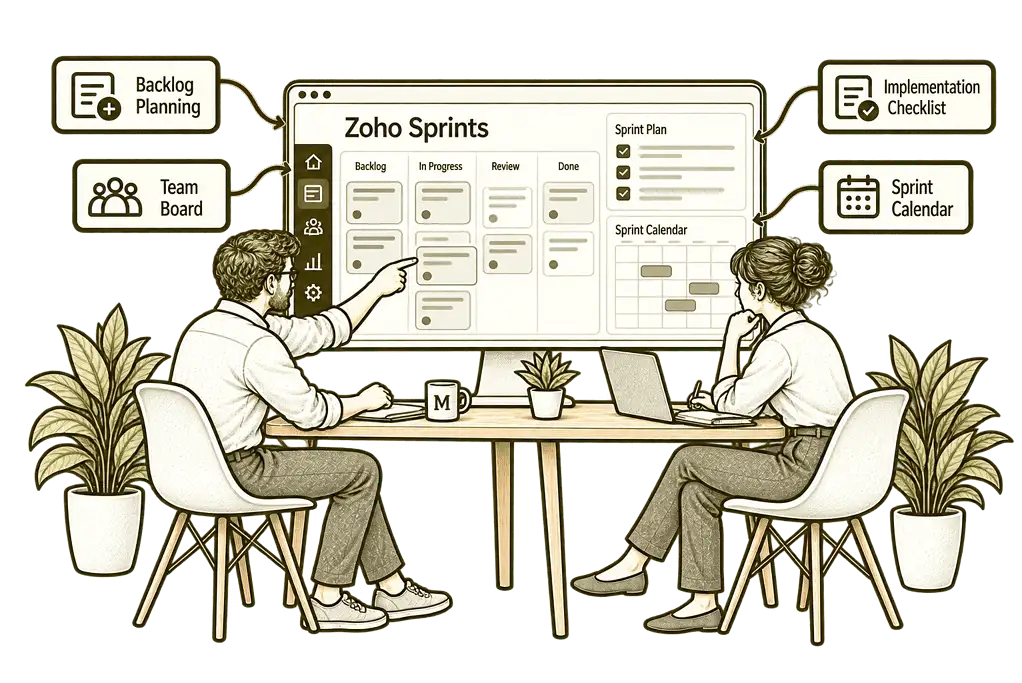
New Zoho Sprints Implementation

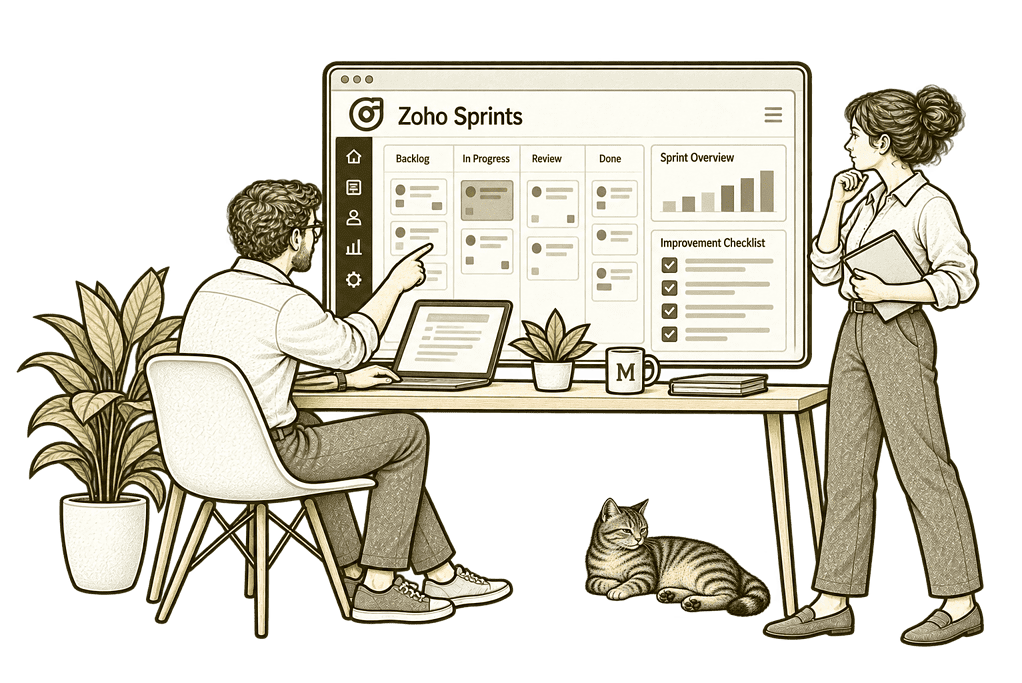
Improve Existing Zoho Sprints

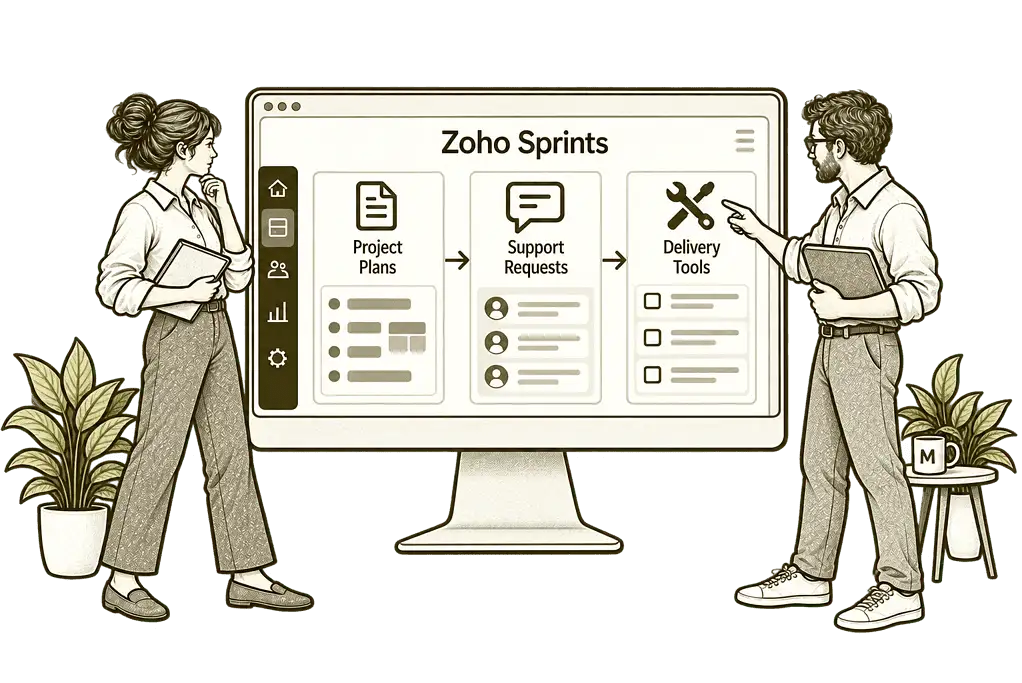
Connect Agile Delivery With Your Systems
Agile Workflows Built Around Your Team
We translate your delivery approach into a usable workspace. Backlog structure, work-item definitions and review routines are designed together, with available features checked against your plan.
Backlog & Work Design
Organise priorities and work items so the team understands the outcome and the next delivery decision.
Board Workflows
Configure statuses and suitable reminders, with clear responsibilities for updates and exceptions.
Data Preparation
Prepare existing work records, checking descriptions, ownership and estimates before importing them.
System Connections
Define delivery-tool handovers with clear source records, supported fields and failure handling.
Reports & Reviews
Configure useful sprint views and agree how measures support learning rather than simplistic comparisons.
Training & Adoption
Help the team manage its backlog, board and review routines through a consistent working process.
One Clear Journey From Idea to Delivery
An idea enters the backlog, the team clarifies the work and agrees what to take into the next sprint. Board updates then show progress before a review informs the next priorities.
We configure that journey so work items, discussions and delivery outcomes remain connected, helping teams understand what they are doing and why.

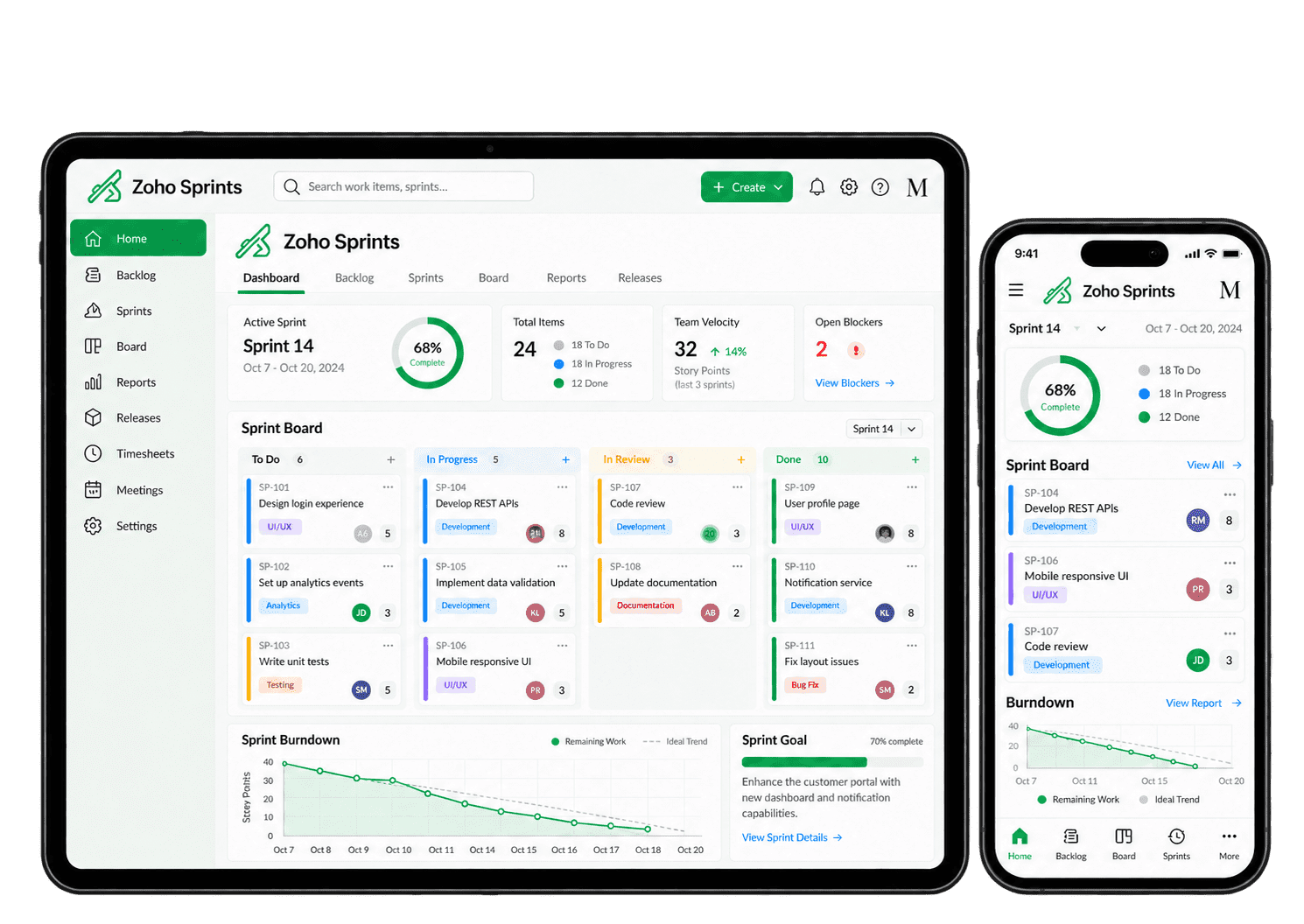
Make Iterative Delivery Easier to Coordinate
Zoho Sprints supports backlogs, boards, epics and releases. We configure the features your team needs and test the process against realistic planning and delivery scenarios.
-
Backlog Capture
-
Work Refinement
-
Sprint Planning
-
Board Updates
-
Team Collaboration
-
Epics & Releases
-
Time Recording
-
Review & Learning
Capture proposed work in an organised backlog, with useful details and a responsible reviewer so requests can be assessed without becoming immediate commitments to deliver.
- Agree required work-item details.
- Define ownership and intake responsibilities.
- Test duplicate and incomplete requests.
For example, a product team receives improvement requests from several departments. We agree how work enters the backlog, which details are required and who owns prioritisation. We agree the information and review owner for each request.
Prepare backlog items for planning with clear outcomes, acceptance expectations and dependencies. The team reviews unclear requirements, checks whether each item is small enough to deliver and identifies the decisions needed before committing work to a sprint.
- Agree useful descriptions and acceptance criteria.
- Define estimation conventions where appropriate.
- Record decisions and outstanding questions.
For example, a broad request asks the team to improve customer onboarding. We help establish a refinement routine that separates the work into understandable items with acceptance expectations and relevant dependencies. The team checks those items with the requester and agrees what completion means.
Plan a sprint around agreed priorities and team capacity, checking dependencies and ownership so selected work supports a clear goal rather than an unchecked list of requests.
- Agree sprint goals and planning responsibilities.
- Configure relevant sprint settings.
- Review available capacity and proposed work.
For example, the team prepares its next delivery cycle. We configure the available planning views around agreed priorities, estimates and responsibilities, then test the process with representative items. We review priorities, capacity and dependencies with the team before selecting work.
Keep board updates consistent with actual progress, giving each status a shared meaning so colleagues know which work needs action, review or a decision before completion.
- Define statuses and completion expectations.
- Agree responsibility for updates.
- Test blocked or returned work scenarios.
For example, a developer finishes a work item but it still needs review. We agree what each board status means and who owns the next step before configuring the workflow. We agree the board states and completion checks before configuring the workflow.
Keep delivery discussions with the relevant work item, recording decisions, owners and escalation so blockers stay visible and colleagues can identify the next useful action.
- Agree where decisions and updates belong.
- Configure appropriate workspace permissions.
- Test relevant collaboration features.
For example, a work item is blocked by a decision from another colleague. We establish how comments, references and ownership stay with that item and when the team escalates a blocker. An unresolved dependency returns to the delivery review.
Group related work through the available epic and release features, checking dependencies and progress so delivery owners can discuss readiness without assuming a guaranteed date.
- Assess available epic and release features.
- Agree grouping and release responsibilities.
- Test item associations and progress views.
For example, several improvements contribute to a planned product release. We assess the available epic and release capabilities and agree how related items are grouped and reviewed. The delivery owner checks dependencies and related work before reporting readiness.
Record relevant effort through available time tools, with clear categories and review ownership so the team can use the information appropriately in planning and reporting.
- Agree time-entry purposes and rules.
- Configure available timesheet options.
- Test corrections and review responsibilities.
For example, the team wants to understand where effort went during a delivery cycle. We configure supported time-recording practices with clear categories and review expectations. The owner reviews missing entries and relevant categories before interpreting totals.
Use completed delivery cycles to review outcomes and learn from blockers, with a named owner for adjusting the next backlog and planning routine based on actual experience.
- Agree review and retrospective routines.
- Configure relevant sprint reports.
- Record actions with clear owners.
For example, a sprint ends with some work completed and several items carried forward. We agree a review routine that checks outcomes, blockers and lessons with the team before adjusting the backlog. The team reviews outcomes, blockers and unfinished items with the relevant owners.
Agile Reporting With Useful Context
We agree what each report means and the records behind it. Measures support team planning and learning; story points and velocity should not be used as simple individual productivity scores or comparisons between teams.
Sprint Progress
Review completed and outstanding work against the agreed sprint scope to identify the next action.
Backlog Readiness
Review priorities and missing work-item details so the team can prepare for the next planning discussion.
Burndown Trends
Assess burndown reports alongside scope changes and update practices to explain the overall trend.
Team Velocity
Review completed estimates in the same team and context to guide planning, without promising output.
Work-Item Flow
Assess available flow and process-time views to identify where work waits or repeatedly returns.
Epic Progress
Review grouped work and its status to understand progress towards the wider delivery outcome.
Release Status
Review associated work items and release stages so delivery readiness can be discussed with context.
Recorded Effort
Review time entries using agreed definitions and permissions rather than assuming hours prove value.
Connect Agile Delivery With the Wider Business
Agile delivery may sit within a wider plan. We scope relevant connections with Zoho Projects and the Zoho One ecosystem so teams can connect iterative work with business delivery needs.
Support and development-tool integrations are assessed against available capabilities and your plan. We agree which system owns each record, what moves between tools and how failures or duplicate items are handled.

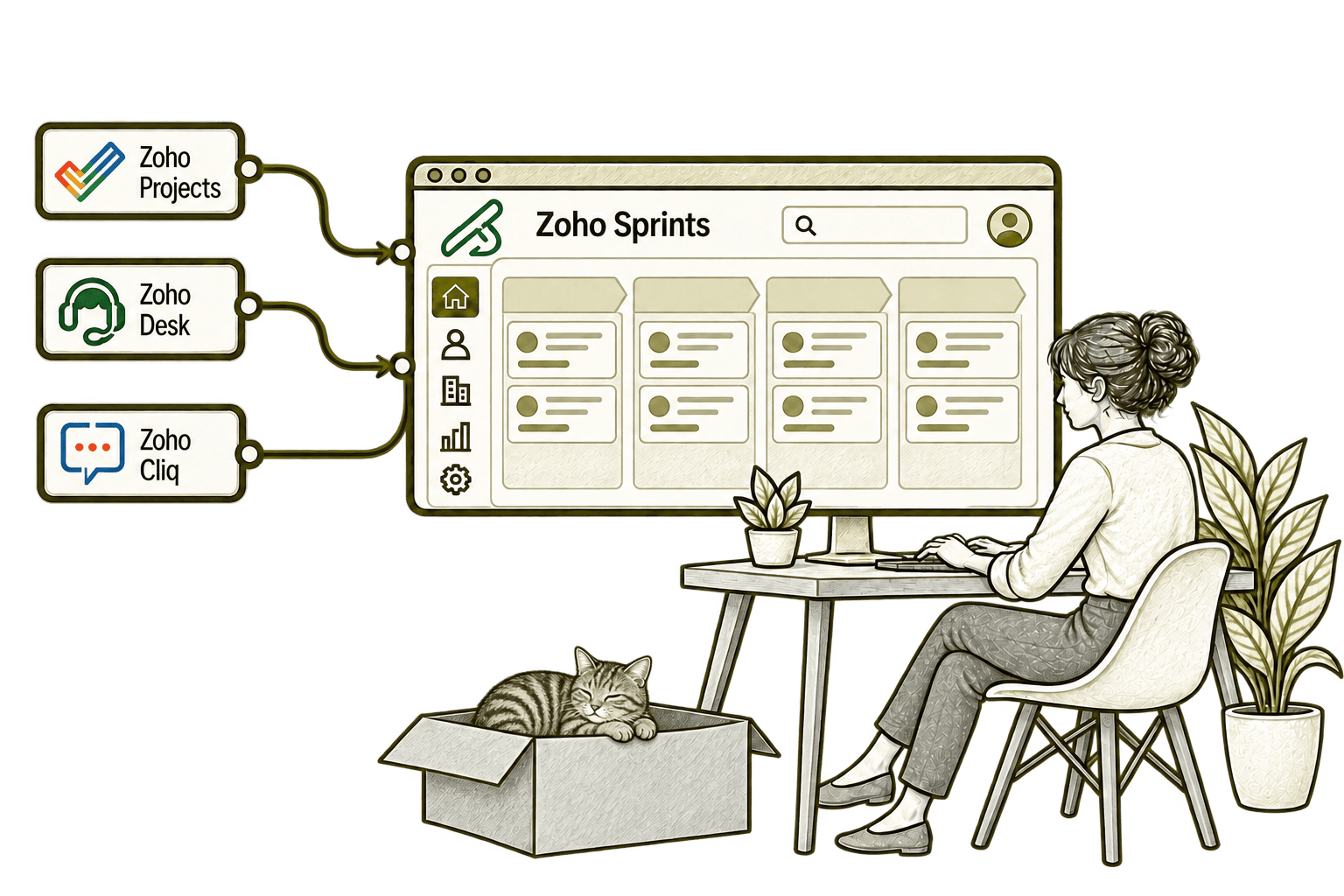
Separate delivery plans make progress harder to reconcile. Connecting Projects with Sprints links mapped work across the two systems, helping teams coordinate project planning and agile delivery.
A support issue can lose context on its way to engineering. Connecting Desk with Sprints links tickets to work items, helping developers understand the problem and support track progress.
Sprint changes are easy to miss outside the planning tool. Connecting Sprints with Cliq brings project updates into selected channels, helping the team discuss blockers sooner.
Wherever Your Agile Setup Starts, Design Matters
Whether you use spreadsheets, another delivery tool or an existing Sprints workspace, we begin with your team’s priorities and working routines.
Starting Fresh
We map backlog structure, work-item definitions and review responsibilities before configuring Zoho Sprints. The first release gives the team a clear place to plan and track iterative work.
Already Using Zoho Sprints
We review backlogs, statuses, permissions and reporting. Improvements focus on unclear priorities, inconsistent updates and the gaps affecting planning or reviews.
A Clearer Starting Point
If the issue spans project governance, iterative delivery and tool connections, we help establish where to start.
Our Business Systems & Operations Audit can clarify the process gaps and recommended priorities.
What a Zoho Sprints Engagement Includes
Discovery & Scope
Agree your delivery approach, team needs and current challenges before defining the implementation scope.
Process & Definitions
Map backlog intake, statuses and review routines with clear rules for work items and ownership.
Configuration & Records
Configure the agreed workspace and prepare existing work records with useful data-quality checks.
Connections & Testing
Test planning, board updates and system handovers against realistic delivery scenarios.
Training & Launch
Guide team members through their tasks and agree responsibilities for using the workspace consistently.
Review & Improvement
Review the working process and prioritise changes based on delivery experience and team feedback.
Scope depends on your delivery approach, data quality, plan and connections. We agree deliverables before work begins; your team retains responsibility for priorities, estimates and delivery decisions.
Different Businesses. Different Iterative Work.
Sprints can support teams delivering work in short cycles. We assess its fit for the process rather than assuming every sector or task needs an agile board.
Organise iterative internal improvement work with clear priorities, reviews and appropriate information access.
Coordinate process and software improvements while keeping operational scheduling in the systems that manage it.
Manage iterative digital delivery with clear team roles, agreed review points and relevant governance controls.
Recruitment & Workforce Agencies
Organise agency systems or service improvements while keeping candidate and placement workflows separate.
Support iterative change initiatives with the governance, review and access controls your organisation requires.
Property & Housing Associations
Coordinate incremental digital or process improvements with clear outcomes and team responsibilities.
Organise iterative service or technology improvements with agreed priorities and regular stakeholder reviews.
Support suitable digital improvement work while retaining specialist construction scheduling and safety systems.
Why Mason & Co
We connect the Zoho Sprints setup to the way your team delivers improvements. You work with senior consultants who consider priorities, team adoption and wider governance alongside tool configuration.
Senior-led consultancy
Work directly with senior consultants who understand your business process and technical delivery.
UK-based, international delivery
Work with our UK-based team across locations, with delivery planned around your working hours.
Architecture + implementation
Connect business design with practical configuration and integrations that support everyday work.
Zoho + AI + automation
Connect Zoho, AI and automation where they solve a clear problem and improve your daily processes.
Not Sure Whether Mason & Co Is the Right Fit?
Tell us what you want to implement, improve or fix. We will discuss whether we can help and recommend a sensible next step based on what you share.
Your Questions Answered
What is Zoho Sprints used for?
Zoho Sprints helps teams organise backlogs, plan iterations and track work through agile boards. It also provides epic, release and reporting capabilities according to your plan.
How does Sprints differ from Zoho Projects?
Sprints focuses on iterative agile delivery, while Projects supports wider project planning and coordination. We assess whether one application or a supported connection between them fits your needs.
Can you configure our backlog and board?
We agree work-item definitions, intake responsibilities and statuses, then configure the supported setup and test realistic planning and delivery scenarios.
Can we migrate from another delivery tool?
We scope migration after reviewing source records, supported import options and required mappings. Ownership, statuses and data quality are checked before moving the agreed records.
Can Sprints connect with development and support tools?
Integration options depend on supported providers and your plan. We assess record ownership, trigger behaviour and error handling before implementing the handover.
Will velocity tell us which team members are most productive?
No. Velocity reflects completed estimates within a team’s context and is intended to inform planning. It should not be treated as an individual productivity score or a reliable cross-team comparison.
How do we get started?
Book a free consultation to discuss your delivery approach and challenges. We will help identify whether you need a new setup, improvements to Sprints or a wider systems audit.
Where Is Your Sprint Delivery Becoming Difficult to Manage?
Tell us how your team plans and reviews delivery today. We will help structure Zoho Sprints around your backlog, responsibilities and reporting, with suitable connections to wider project and business processes.
30 minutes. No charge. No obligation.